
The Rise of AI as a Global Power Player
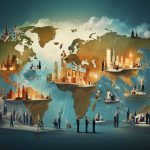
Artificial Intelligence (AI) has evolved from a laboratory curiosity into a central force driving the global economy, politics, and culture. What was once the domain of computer scientists is now reshaping international diplomacy, defense strategies, and media influence. Governments and corporations alike are investing heavily in AI to gain competitive advantages that could define the next century.
- The Rise of AI as a Global Power Player
- Political Leaders and the AI Arms Race
- The Influence of Celebrities in the AI Conversation
- AI and the Transformation of Global Economies
- Ethical Challenges and the Search for Regulation
- AI’s Role in International Relations
- Cultural Transformation in the Digital Era
- The Future of AI and Humanity’s Role
- FAQs
- Conclusion
From autonomous weapons to data-driven diplomacy, AI has become the silent negotiator behind many of the world’s political and economic decisions. Countries that dominate in AI are not only enhancing their technological capabilities but are also redefining the structure of power itself. The world has entered an era where code and computation hold as much influence as treaties and trade.
Political Leaders and the AI Arms Race
AI development has quickly turned into a modern-day arms race. Nations like the United States, China, and the European Union are racing to control the next generation of machine intelligence. Each seeks to lead in innovation while protecting their sovereignty from cyber threats and digital manipulation.
In the political sphere, AI is being used to analyze public sentiment, forecast election outcomes, and even design campaign strategies. Politicians rely on AI-driven systems to tailor messages, identify voter trends, and predict opposition tactics. However, the same tools that empower democratic participation can also endanger it, as misinformation spreads faster than it can be corrected.
The geopolitical implications are profound. The nation that leads in AI will likely dominate global economics, cybersecurity, and even military strategy for decades. This competition is no longer confined to laboratories—it’s unfolding in parliaments, corporations, and international summits.
The Influence of Celebrities in the AI Conversation
While governments debate regulations and policies, celebrities have stepped into the AI conversation as powerful cultural influencers. Figures like Elon Musk, Mark Ruffalo, and Scarlett Johansson have publicly expressed their opinions about AI’s potential risks and benefits. Musk’s warnings about uncontrolled AI development have pushed global discussions on ethics and safety, while other influencers use their platforms to promote innovation for good.
This blending of entertainment and technology has created a unique form of advocacy. Celebrities are leveraging their audiences to raise awareness about AI’s societal impact—ranging from job automation to creative authenticity in film, art, and music. The line between influencer and policymaker continues to blur as public figures help shape public perception of emerging technologies.
AI and the Transformation of Global Economies
AI’s impact on global economies is unprecedented. Automation, machine learning, and predictive analytics are revolutionizing industries from manufacturing to healthcare. Countries are now restructuring their economic strategies to accommodate AI-driven growth.
In business, AI enables more efficient production systems, reduces human error, and enhances decision-making through data analytics. Yet this innovation comes with challenges. Millions of jobs are at risk of being replaced by machines capable of working faster and cheaper. Economists predict that while AI will create new employment opportunities, the transition period could cause massive social disruption.
Global corporations like Amazon, Google, and IBM are already deploying AI to manage logistics, improve customer experience, and optimize productivity. The growing dependency on these technologies signals a permanent shift toward digital economies, where nations compete not through labor but through data.
Ethical Challenges and the Search for Regulation
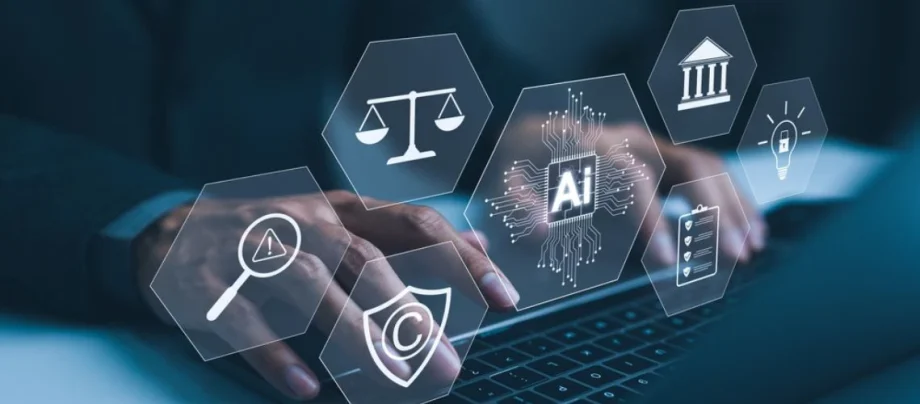
As AI integrates deeper into everyday life, ethical concerns continue to grow. Questions surrounding privacy, bias, accountability, and digital rights dominate policy debates. Should an AI system be allowed to make life-and-death decisions? Who is responsible when an autonomous vehicle causes an accident?
Different nations approach these questions differently. The European Union emphasizes strong data protection and human oversight, while the United States focuses on innovation freedom. Meanwhile, China prioritizes large-scale implementation with government supervision. The absence of a global regulatory framework leaves room for both progress and peril.
Tech experts argue that ethics must evolve alongside innovation. Without responsible governance, AI could widen inequalities, manipulate information, and even challenge democratic values. Humanity stands at a crossroads—whether to harness AI for progress or allow it to spiral beyond control.
AI’s Role in International Relations
Artificial Intelligence is not only changing how nations operate internally but also how they interact on the world stage. Diplomats are using data analytics to predict economic trends, simulate conflict outcomes, and enhance negotiation strategies. Military alliances are developing autonomous defense systems that can respond faster than human operators.
Cyber diplomacy is now a key part of foreign policy. Nations are engaging in digital treaties to prevent cyberwarfare and ensure responsible use of AI in military applications. However, global trust remains fragile. As AI systems become more sophisticated, the potential for misuse in surveillance, espionage, and political manipulation grows.
Cultural Transformation in the Digital Era
Beyond politics and economics, AI has transformed how people create and consume culture. The entertainment industry, in particular, is witnessing a digital renaissance. Music is being composed by algorithms, films are enhanced by AI editing, and virtual influencers have millions of followers online.
While this innovation fascinates audiences, it also raises philosophical questions. Can art created by a machine hold emotional authenticity? How do creators retain ownership when algorithms can replicate their style? These debates are redefining creativity itself and reshaping global entertainment as a hybrid of human imagination and machine intelligence.
The Future of AI and Humanity’s Role
The ultimate question remains—will AI serve humanity, or will humanity serve AI? Experts believe the answer depends on how societies balance innovation with ethics. Education systems must adapt to prepare the next generation for a world where machines think and act alongside humans.
Artificial Intelligence can solve some of the world’s greatest challenges, from climate change to healthcare. Yet without thoughtful control, it could also deepen inequality, increase unemployment, and threaten individual freedoms. The coming years will determine whether AI becomes humanity’s greatest ally or its most powerful adversary.
FAQs
How does AI influence global politics?
AI influences politics by shaping campaigns, analyzing voter data, and enhancing cybersecurity strategies, but it also creates risks of surveillance and misinformation.
What role do celebrities play in AI awareness?
Celebrities amplify public understanding of AI’s benefits and dangers through advocacy, influencing global debates on technology and ethics.
Is AI good or bad for the global economy?
AI boosts efficiency and innovation but can displace workers and increase economic inequality if not managed with foresight and fairness.
How are governments regulating AI?
Different nations are developing AI regulations at varying speeds. The EU focuses on ethical oversight, while the US and China prioritize technological growth.
Can AI ever replace human creativity?
AI can mimic creativity but not human emotion or experience. It enhances creativity rather than replacing it completely.
Conclusion
Artificial Intelligence is rewriting the rules of power, politics, and progress. It is reshaping industries, redefining global influence, and challenging humanity to evolve intellectually and ethically. In this digital revolution, nations that integrate responsibility with innovation will lead the way toward a sustainable and balanced future.
The collaboration between political leaders, technology pioneers, and cultural influencers will decide whether AI becomes a symbol of unity or division. Humanity stands on the edge of a new era—one defined not by borders or beliefs, but by how wisely it wields the intelligence it has created.